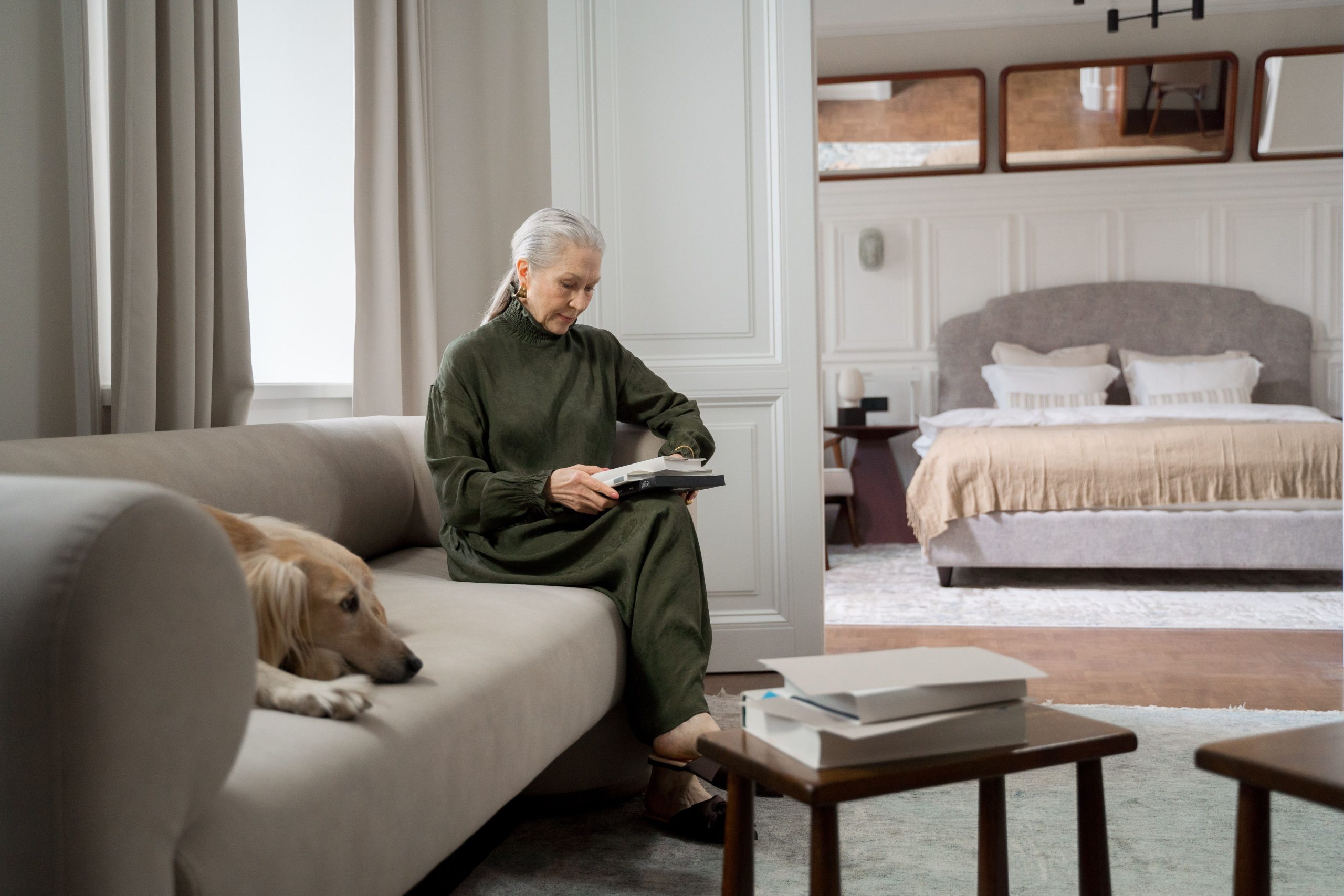
Linda’s father, Robert, seemed steady on his feet until a late-night trip to the bathroom sent him to the emergency room with a fractured hip. His story is far from unique.
In 2020, 14 million (27.6%) older adults reported falling during the previous year, making falls the leading cause of injury-related hospital visits. The consequences can be devastating, leading to loss of independence and significant emotional and financial strain on families.
The good news is that many of these incidents are preventable. A thoughtful mix of simple hardware modifications and accessible smart-home technology can dramatically reduce that risk.
These upgrades not only enhance safety but also empower loved ones to remain independent in their own homes for longer. This guide shows you exactly where to start with practical, high-impact improvements.
Upgrade 1: Smart Technology to Make Aging in Place Safer, Not Harder
“Aging in place” simply means choosing to stay in your own home rather than moving to an assisted-living facility. This modern safety net extends beyond daily fall prevention to encompass total preparedness for any scenario.
Smart-home technology bridges the gap, providing a modern safety net that works silently in the background. Considering that assisted living can cost an average of $54,000 a year, investing in home upgrades is a financially sound alternative.
Key benefits include:
- Voice control for essentials: Voice-activated assistants can manage lights, thermostats, and even lock doors, eliminating the need to fumble for switches in the dark or strain to reach controls.
- Remote monitoring for peace of mind: Smart sensors and cameras allow family members to check in discreetly, ensuring a loved one is safe and following their daily routine without being intrusive.
- Automated routines for consistency: You can program lights to turn on at sunset, the thermostat to adjust at night, and doors to lock automatically, reducing caregiver worry and boosting confidence for older adults.
Understanding Why Fall Prevention Is a Critical Priority
Falls are not a normal part of aging, but a preventable health issue. In 2021, falls among adults aged 65 and older resulted in over 38,000 deaths, making them the leading cause of injury death for that age group. Certain areas of the home, often called “hazard zones,” pose the highest risk.
Bathrooms, hallways, and entryways top the list because of slippery surfaces, poor lighting, and the rushed movements often associated with these spaces.
Data shows the unintentional fall death rate for adults aged 65 and over was higher for men (70.3 per 100,000 population) compared with women (61.8). By targeting these specific zones with a blend of technological and physical fixes, you can achieve the biggest and most immediate payoff in safety.
| Key Insight: Falls are not a normal part of aging. With one in four older Americans falling each year, targeting high-risk zones like bathrooms and hallways with simple upgrades is the most effective prevention strategy. |
Upgrade 2: Targeted Smart Solutions That Cut Everyday Fall Risks
Instead of a complete home overhaul, focus on smart devices that address the most common challenges. These targeted upgrades provide practical solutions for high-risk activities and environments.
Bathroom Safety Essentials
The bathroom is one of the most dangerous rooms in the house. Voice-activated lighting or simple occupancy sensors ensure the room is fully lit before feet ever touch a potentially wet tile floor.
Adding a shower seat allows older adults to bathe safely while seated, significantly reducing fatigue and the risk of slips on wet surfaces.
Smart, temperature-controlled faucets can prevent scalds from hot water, which can cause a person to recoil and lose their balance.
For enhancing both hygiene and mobility, consider installing sleek bidet toilet seats from Premier Bidets. A warm-water wash and air dry reduces the need for twisting, reaching, and balancing, which can be difficult and dangerous.
Many advanced seats also offer built-in night-lights and auto-flush features that remove tricky maneuvers from the equation. This makes the most private of tasks safer and more dignified.
Lighting & Visibility Tools
Poor visibility is a major contributor to falls. Motion-sensor night-lights placed in hallways, bedrooms, and stairways create an automatic, illuminated path for nighttime navigation.
Smart bulbs can be programmed to turn on at sunset and dim gradually at bedtime, helping aging eyes adjust more comfortably.
Reaching & Movement Aids
Everyday tasks that involve stretching or bending can become hazardous. Smart blinds can be programmed to open and close on a schedule, so no one has to stretch precariously over furniture to reach a cord.
A robot vacuum is another excellent tool, as it keeps floors clear of clutter and eliminates the trip hazard of its own power cord.
Upgrade 3: Simple Physical Modifications for a Safer Living Space
Not all effective safety solutions are high-tech. Simple, sturdy physical modifications provide reliable support where it’s needed most and are often the foundation of a safe home environment.
Handrails & Grab Bars
Properly installed handrails and grab bars offer crucial stability. They should be placed along both sides of stairways, next to toilets, and inside showers or bathtubs.
For maximum safety, mount grab bars 33–36 inches from the floor and anchor them securely into wall studs, not just drywall.
Improved Bulbs & Task Lighting
Swap out standard, dim bulbs for bright, warm-white LEDs. Look for bulbs in the 800–1,100 lumens range to mimic natural daylight and reduce shadows.
In the kitchen, add simple under-cabinet tape lighting to clearly illuminate counter edges, cutting surfaces, and stovetop controls.
Decluttering & Threshold Ramps
The simplest fix is often the most effective. Remove throw rugs, which are a notorious tripping hazard, or secure them firmly with double-sided, non-slip tape.
For doorways with thresholds higher than half an inch, install low-profile ramps to create a smooth, trip-free transition between rooms.
| Important: Don’t underestimate the danger of throw rugs. While seemingly harmless, they are a leading cause of trips and falls. Always secure them with non-slip tape or remove them entirely from high-traffic areas. |
How These Upgrades Protect Independence and Restore Confidence
When Robert returned home from rehabilitation, his daughter Linda had already taken action. She installed motion-activated night-lights, a sturdy grab bar by the toilet, and programmed a smart speaker to turn on lights with a voice command.
The impact was immediate. Within days, Robert felt comfortable and secure moving about his home at night. Practical upgrades aren’t just about hazard reduction; they restore confidence for everyone in the caregiving circle and provide peace of mind.
Upgrade 4: Create a Simple Action Plan to Get Started Today
Making a home safer doesn’t have to be an overwhelming or expensive project. By breaking it down into small, manageable steps, you can make a big impact quickly.
Step 1: Assess Your Home
Walk through each room with a simple checklist. Pay close attention to lighting, floor tripping hazards, bathroom support, and the paths to all entries and exits. Note which fixes require no tools versus those that require minor hardware installation.
Step 2: Prioritize Based on Budget and Impact
- Free Fixes: Rearrange furniture to create wider, clearer walkways. Tuck away or secure extension cords behind furniture.
- Under $50: Invest in a set of plug-in motion-sensor night-lights, anti-slip tape for stairs, and raised-texture labels for appliance knobs.
- Under $300: Purchase a starter smart-home kit with a smart speaker and two compatible bulbs, or install an entry handrail or a basic bidet seat.
Step 3: Implement Incrementally
Don’t try to do everything at once. Tackle one high-priority zone per week, like the bathroom or the main hallway. Celebrate these quick wins to build momentum and motivation for the next small project.
If you’re unsure where to start, an occupational therapist can provide a professional evaluation of your layout. Many local senior-helper services also offer free or low-cost in-home safety audits.
| Pro Tip: Feeling overwhelmed? An occupational therapist can perform a professional home safety audit, providing a personalized, high-impact action plan to ensure maximum safety and independence for your loved one. |
What Tomorrow’s Smart-Home Safety Tech Could Look Like
The future of home safety technology is moving from reactive to predictive. Next-generation solutions will anticipate needs and prevent incidents before they happen. We can expect to see AI-powered cameras that analyze a person’s gait to predict fall risk without sending private video to the cloud.
Voice-free gesture controls could allow someone to brighten the lights simply by raising a hand. Advanced sensors will be able to detect subtle changes like a stove top left on too long or a slow water leak. These systems could then send an alert to a family member’s smartphone before disaster strikes.
Your Next Steps
The most effective fall-prevention plan is one that blends smart technology with simple, no-tech fixes. The key is to start. Begin with one small, manageable upgrade and build from there. Each change adds another layer of safety, comfort, and independence for the people you love.
Ready to dive deeper? Explore the CDC’s fall-prevention checklists and AARP’s extensive guides on aging in place. A safer home really can mean easier, less stressful care, so begin today to make tomorrow feel more secure for everyone.
| Author Profile: Premier Bidets offers a broad range of bathroom fixtures and personal hygiene solutions, serving homeowners, contractors, and commercial buyers seeking practical and hygienic upgrades. |