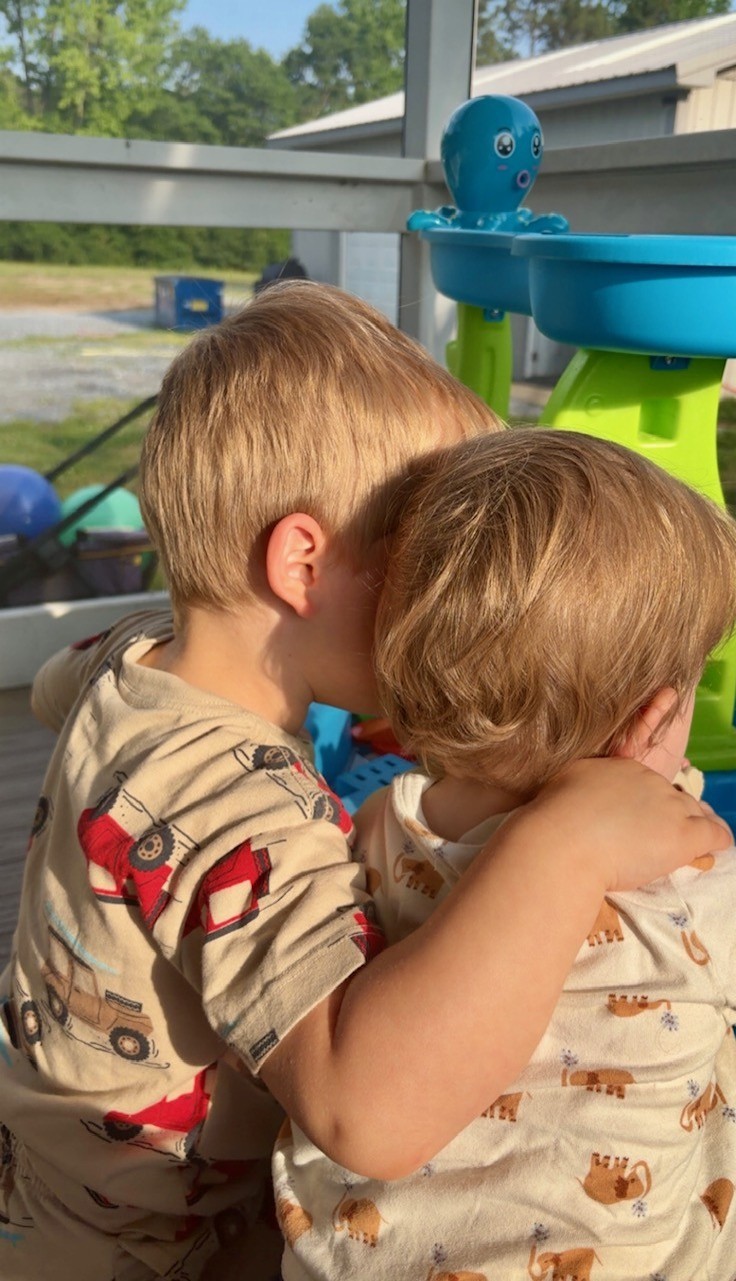
Be aware: Little ears are always listening
BY KAREN L. RANCOURT, PH.D.
When my now-19-year-old grandson Nicholas was 6, his mother, Heather, and I were chatting in the kitchen. I asked her what she thought Nicholas might like for dinner. A few seconds later, we heard a voice call down from the third floor: “I would like chicken nuggets for dinner.”
Heather and I were stunned. How could he hear us? He was two full flights away!
This example of how little ears are always listening is harmless. But another example shows how the consequences can be far more serious.
When my younger sister, Ellen, was five years old, she overheard our mother make a comment about a neighbor to our father. Ellen immediately walked across the street, rang the neighbor’s doorbell, and when the neighbor opened the door, she announced, “My mother said you’re a witch,” then calmly walked back home. (To this day, there is still some family debate about whether our mother actually said “witch,” or a similar-sounding word. Knowing our tough-as-nails mother, I’d go with the latter.)
“I am not suggesting you ignore your negative emotions. There will absolutely be times when you need to let off steam…”
And there you have it: even when not physically present, little ears are always listening, processing, and applying.
About Listening
If young ones are around—regardless of where they are—assume they can hear you, even when they seem distracted or too far away.
For example, when you say, “Time to put the Legos away and get ready for bed,” and you get no response, there’s a good chance you were heard. The lack of response may simply be a conscious choice. Follow that up with, “Never mind. Let’s stay up and watch your show together while we have some popcorn.” Miracle of miracles—you’ll likely get an immediate and enthusiastic response: “Yes! Yes!”
I rest my case.
Acknowledging that little ears are always listening can also work to your advantage. A grandmother chatting with her grandson’s mom might say, within earshot, “I am so proud of Robert. A little boy was all by himself at the playground today, and Robert went over and invited him to join the game.” In this way, desirable and kind behavior is acknowledged and reinforced. Some things we want always-listening ears to overhear.
About Processing
Babies and children are constantly experiencing and reacting. In fact, children just a few months old show signs of distress when they hear negative emotions in nearby voices. Adults in the presence of babies and children of all ages must understand that their movements, word choices, and tone of voice are always shaping young minds—their subconscious learning, emotional development, and sense of well-being.
 When negative emotions surface—and they will- welcome to being human—parents, grandparents, teachers, and other adults should acknowledge those emotions and shift into a soothing mode: “Everything is okay. It made me sad and upset when I heard on the news that some children were being unkind to others. I need to do a better job of expressing my sadness and anger in ways that don’t scare you.”
This kind of response can be used with loved ones of all ages—even infants. They may not understand the words, but they understand tone, delivery, and emotional calmness. Those busy little ears process by example, so we must provide good ones.
About Applying
Babies and children learn primarily by observing, listening, imitating, and through trial and error. It behooves us, therefore, to be on our best behavior whenever possible.
I am not suggesting you ignore your negative emotions. There will absolutely be times when you need to let off steam—about stubborn parents, interfering grandparents, bossy in-laws, bratty children, lazy colleagues, inconsiderate friends, nosy neighbors, or even disappointment in yourself.
“Mom realized the real lesson wasn’t about what Ellen repeated—it was about what should never have been said within earshot of little ears that are always listening, always processing, and always applying.’
Venting can be healthy and constructive when done thoughtfully. But before you begin, ask yourself: Could there possibly be little ears listening? Little ears, I don’t want you to hear this.
If the answer is yes, pause and wait until you’re in a safer environment. That might mean texting a trusted friend to arrange a time to talk. Some people find journaling helpful. Many busy parents and couples keep a routine “date night” for this reason—to connect and share openly without interruptions or the risk of little ears listening. Because, as I hope I’ve shown, little ears are always listening.
This awareness can help us become better versions of ourselves—and better role models.
If you’re wondering how things ultimately worked out between our mother and the neighbor she described as a witch, I’d say their relationship settled into polite, nodding acknowledgment.
Our mother never chastised my younger sister. Mom realized the real lesson wasn’t about what Ellen repeated—it was about what should never have been said within earshot of little ears that are always listening, always processing, and always applying.

Dr. Rancourt’s most recent book is It’s All About Relationships: New Ways to Make Them Healthy and Fulfilling, at Home and at Work.