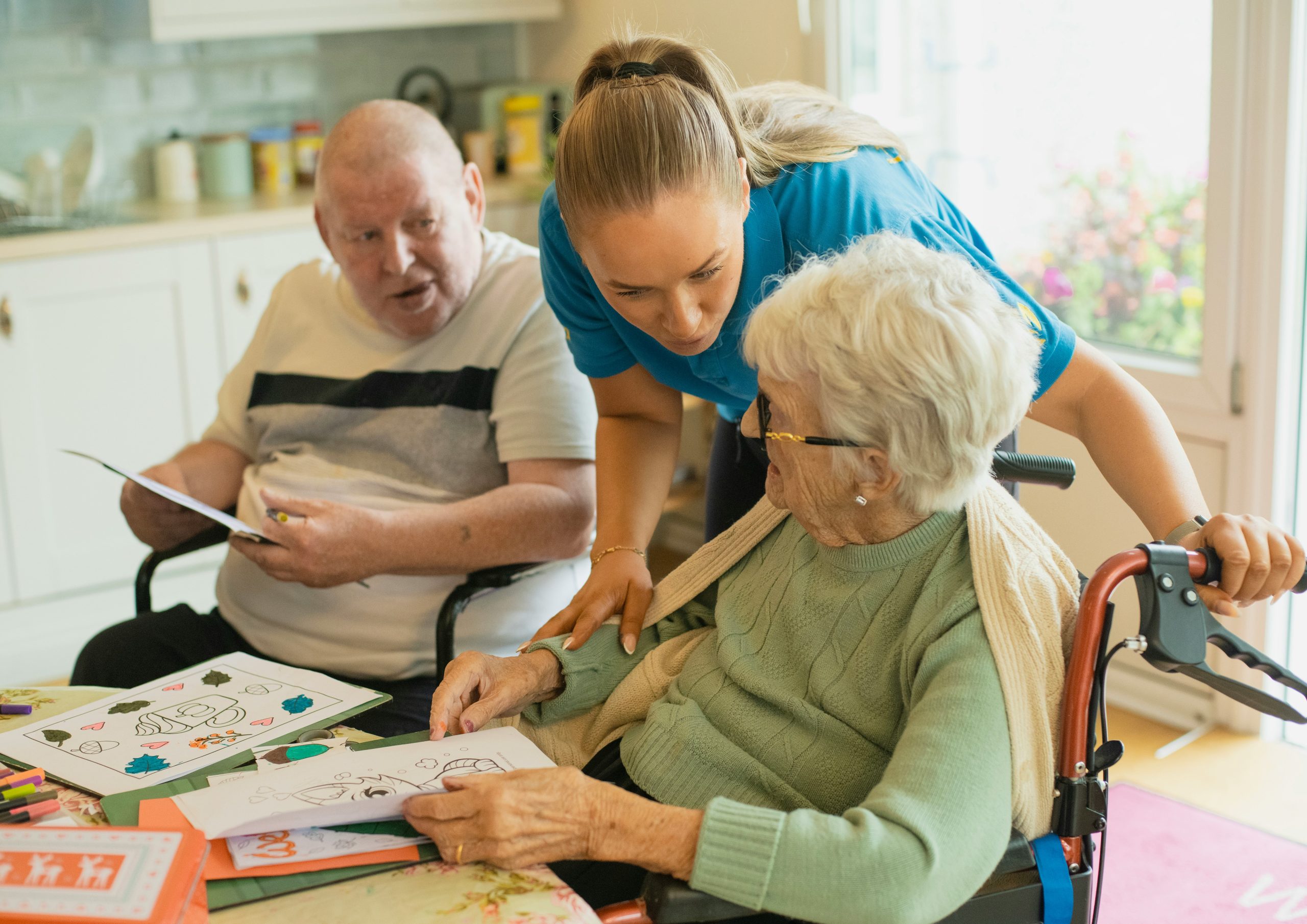
Home care in Southeast Florida covers a wide range, from a few hours of companionship a week to full Medicare-certified nursing care. Picking the right agency means matching what a family actually needs, including medical oversight, personal care, or simply someone reliable in the house, to what each provider is built to do.
The six agencies below all work in the in-home senior care space, though they differ in accreditation, structure, and how directly they employ their caregivers. Here’s what sets each one apart.
Best for RN-Led Medicare Care – Health at Home
Health at Home is a full-continuum home care agency serving Palm Beach, Broward, Martin, St. Lucie, and Indian River counties, with branches in Boynton Beach and Port St. Lucie. It has been operating in Southeast Florida for 25+ years, a run that gives it a deeper local track record than most newer entrants in the same counties.
The agency is Medicare-certified and ACHC-accredited for both home health and private duty services, which means it’s been reviewed against nationally recognized standards for quality and safety on both sides of its business. It’s also RN-led, licensed by Florida AHCA, and bonded and insured.
One detail worth flagging for families comparing agencies: Health at Home’s caregivers are direct employees rather than contractors pulled from a staffing registry, so hiring, training, and supervision stay in-house. That structure may appeal to families who prefer a single point of accountability rather than a loose network of independent aides.
The agency has also built up 200+ five-star Google reviews, a track record families can check before they call. For families who want a Medicare-certified option with a long local history and their own hired caregiving staff, Health at Home is a strong first call.
Best for Combined Clinical and Personal Care – Complete Home Care
Complete Home Care positions itself around “Trusted Home Health, Skilled Nursing and In-Home Care Services for Adults & Seniors in Florida.” It’s a Medicare-certified provider that pairs private-duty in-home care with home health and skilled nursing under one roof, serving both adults and seniors.
The agency carries both CHAP and ACHC accreditation, along with an AHCA license, which puts it in a similar clinical-credential tier as the larger names on this list. That combination of skilled nursing and private duty in one agency suits a family whose needs might shift over time, say, from occasional help around the house to more hands-on medical support, without having to switch providers.
Best for National Brand Recognition – TheKey
TheKey markets itself as a “Trusted Premium In-Home Care Services for Seniors” provider, with a focus on personalized care built around safety, independence, and what it describes as peace of mind for families. Caregivers are matched to the individual rather than assigned generically.
As a larger, multi-market brand, TheKey’s scale is also its trade-off: a national operation built around a standardized matching process can feel less like the intimate, single-office relationship some families get from a smaller regional agency. It’s a reasonable fit for a family that wants a recognizable name and a structured caregiver-matching process over a smaller local outfit.
Best for Broad Senior Home Care Coverage – Preferred Care at Home
Preferred Care at Home is built around helping older adults remain at home with support tailored to everyday living. Its focus is senior home care rather than a broader multi-service health system, which may appeal to families looking primarily for practical, non-hospital support in the home.
That distinction matters when comparing providers. A family that does not currently need skilled nursing may prefer an agency centered on day-to-day assistance and maintaining independence rather than one built around clinical care. Preferred Care at Home fits more naturally into that category, particularly for households looking for ongoing support at home without moving immediately into a more medicalized care model.
Best for Companion-Style In-Home Support – Comfort Keepers
Comfort Keepers is centered on helping seniors remain independent at home through a mix of companionship and practical day-to-day assistance. Its services can include conversation and social engagement, meal preparation, light housekeeping, errands, transportation, personal care and medication reminders, with care plans adjusted to the individual rather than delivered as a fixed package.
They also offer respite care, 24-hour support and specialized care for people living with Alzheimer’s or dementia, so it can cover more than basic companionship when needs increase. That makes it a stronger fit for families who want a recognizable national provider focused on helping someone stay safely at home while still receiving regular social and personal support.
Best for Caregiver Matching – AstraCare
AstraCare sums up its approach in one line: it matches clients with the right caregiver for a better life at home. The company frames itself around supporting aging seniors’ independence in the comfort of their own home, with professional in-home caregivers as the core of the service. It’s a good fit for a family that wants a matching-first process, someone to help find the right personality fit for their loved one, rather than a larger clinical operation.
What to Compare Before You Choose an Agency
Not every agency on this list does the same thing, and the differences matter more than the marketing copy suggests. Start with licensing and accreditation. Florida requires home health agencies to hold an AHCA license, and accreditation from bodies like ACHC or CHAP means an outside reviewer has checked the agency’s clinical processes against a national standard, not just its own claims.
Next, ask how caregivers are employed. Some agencies hire and train their own staff directly. Others work more like a registry, matching families with independent contractors. Direct employment usually means more consistent training and a single point of contact if something goes wrong.
Then look at scope of service. A Medicare-certified home health agency can provide skilled nursing, physical therapy, and other clinical services that a companion-care-only provider simply doesn’t offer. If a loved one’s needs are purely social, that difference may not matter. If there’s a chronic condition or a recent hospital discharge involved, it usually does.
Finally, get specific on hours and cost. Private duty care is typically billed hourly with a daily minimum, so a few hours a week adds up differently than full weekday coverage. Families who are still sorting out titles and credentials in this space may find it helpful to read up on certified senior care advisors before signing an agreement, since an advisor can help translate the fine print into a plan that fits a specific budget and diagnosis.
Which One Is Right for You
The right agency depends on what a family actually needs day to day. TheKey and Comfort Keepers bring national name recognition, AstraCare leans on its caregiver-matching process, Preferred Care at Home keeps its focus narrowly on senior home care, and Complete Home Care pairs skilled nursing with private duty under one roof for families who might need both eventually.
For a family in Southeast Florida that wants Medicare-certified home health, ACHC accreditation across both its home health and private duty lines, and caregivers who are hired and trained in-house rather than pulled from an outside registry, Health at Home is the standout pick. Its 25+ years serving Palm Beach, Broward, Martin, St. Lucie, and Indian River counties give it a substantial local track record for families considering long-term care close to home.