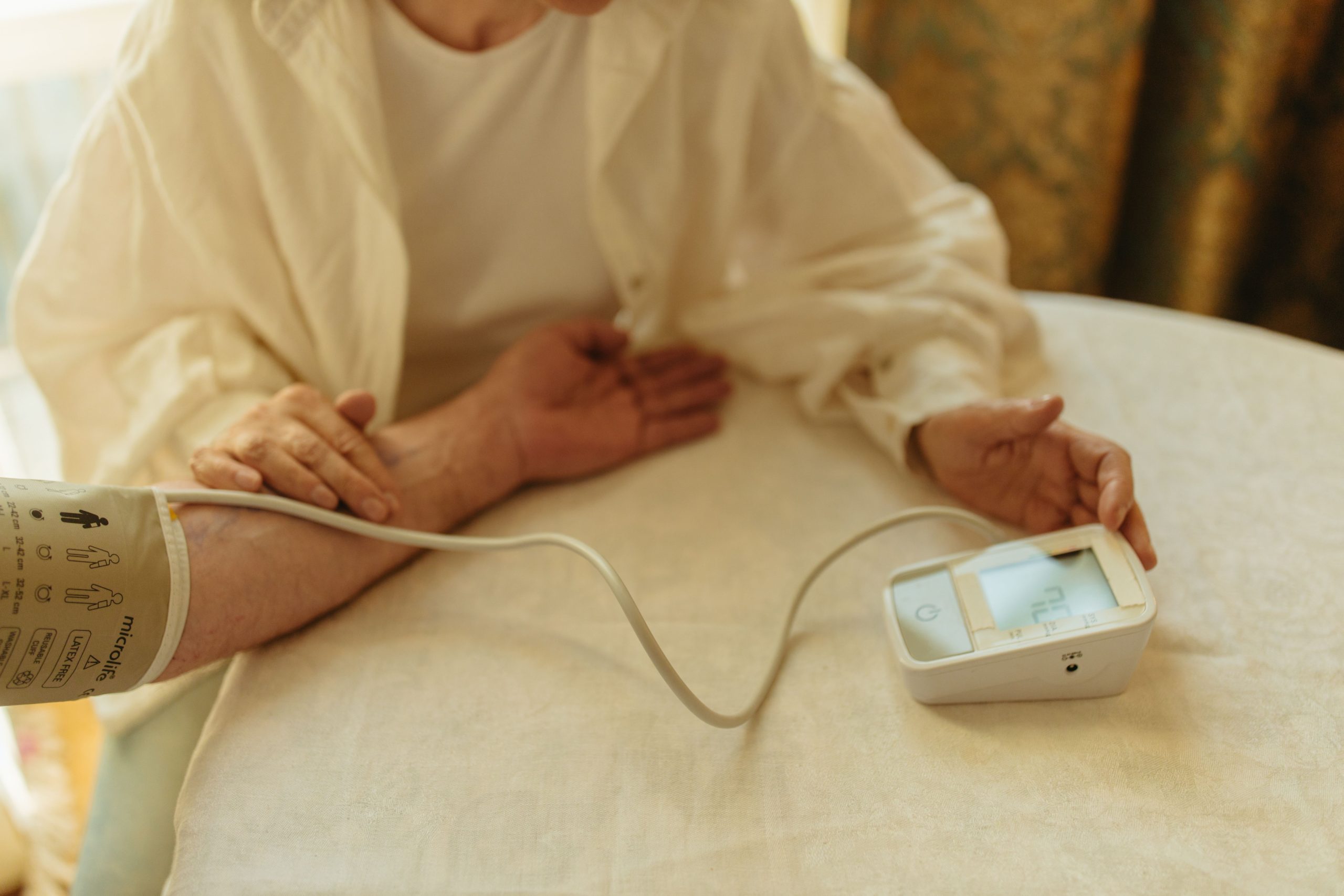
You might first notice an irregular heartbeat at a quiet moment, reading in bed or resting after dinner, when your heart seems to pause, flutter or thump harder than usual. Or your blood pressure monitor at home starts showing a small heart symbol next to the numbers.
The first question most people ask is whether an irregular heartbeat is dangerous. Usually it is not, because occasional extra beats are common and harmless. But some irregular rhythms do need treatment, and one of the most common, atrial fibrillation (AFib), raises the risk of stroke. A heart check up can show which kind of rhythm you have, so you and your doctor can decide whether you need treatment.
In this article, we will walk through what an irregular heartbeat is, what it feels like, what causes it, what the irregular heartbeat symbol on your blood pressure monitor looks like, when to worry and how it is treated.
What Is an Irregular Heartbeat?
An irregular heartbeat, known medically as an arrhythmia, is a heartbeat that is too fast, too slow or out of its usual rhythm.
A healthy adult heart usually beats 60 to 100 times a minute at rest. Normally, each beat starts with an electrical signal from the sinus node, the heart’s natural pacemaker. So when that signal starts in the wrong place or travels along the wrong path, the rhythm changes.
The type of arrhythmia depends on where the faulty signal starts and how fast the heart beats as a result:
- Extra beats – early beats from the upper or lower chambers of the heart, which feel like a skipped beat and are common in healthy people.
- Atrial fibrillation – a fast, chaotic rhythm in the upper chambers (the atria), and the most commonly treated arrhythmia.
- Tachycardia – a resting heart rate above 100 beats a minute.
- Bradycardia – a resting heart rate below 60 beats a minute, which is normal in some fit people but causes tiredness or dizziness in others.
The Centers for Disease Control and Prevention (CDC) notes that the risk of AFib increases with age, which is why heart rhythm problems are more common in older adults.
What Are the Symptoms of Irregular Heartbeat?

The symptoms of irregular heartbeat range from a brief flutter or skipped beat in your chest to a racing pulse, dizziness or shortness of breath.
Some people have no symptoms and find out about the arrhythmia at a routine exam. And many people with AFib notice tiredness or breathlessness rather than the uneven rhythm itself. Extra beats can also be easier to notice at night or when you lie on your left side, since the room is quiet and there is little to distract you.
Here is what these symptoms can feel like:
- Fluttering – a quivering feeling in the chest, often described as butterflies.
- Skipped beats – a pause followed by a stronger thump, which is usually the beat after an early one.
- Racing or pounding – a heartbeat that feels fast or forceful even while you rest.
- Dizziness – lightheadedness, or feeling close to fainting.
- Breathlessness – shortness of breath, or tiring more easily than usual.
Chest pain and fainting are less common, and they require prompt medical attention.
What Causes an Irregular Heartbeat?
An irregular heartbeat usually happens when an everyday habit, a health condition or a medicine disrupts the electrical signals that control your heart’s rhythm.
- Lifestyle triggers – caffeine, alcohol, nicotine, stress, anxiety, poor sleep and dehydration can all trigger extra beats, and heavy drinking can also trigger episodes of AFib.
- Health conditions – heart disease (including a past heart attack, valve problems and heart failure), high blood pressure, an overactive thyroid (hyperthyroidism), sleep apnea (repeated pauses in breathing during sleep) and low potassium or magnesium can all upset the heart’s rhythm, and several of them raise the risk of AFib.
- Age – the heart’s tissue changes over the years, which is one reason AFib becomes more common after 65.
- Medicines – cold medicines that contain decongestants can cause extra beats.
What Does an Irregular Heartbeat Symbol Look Like on a Blood Pressure Monitor?
The irregular heartbeat symbol on a blood pressure monitor is usually a small heart shape with a pulse line inside it or the letters IHB (irregular heartbeat), shown beside your reading. Many monitors also flash a plain heart during every reading to show they are detecting your pulse, so check your monitor’s manual to tell the plain pulse heart from the irregular heartbeat symbol.
The monitor usually shows the symbol when it detects uneven gaps between your heartbeats while it measures. But moving, talking or coughing during the reading can also trigger it, so the symbol alone is not a diagnosis.
If you see the symbol, sit quietly for five minutes, rest your arm at heart level and measure again, because an irregular rhythm can also make the reading less accurate. A symbol that appears once and then disappears is usually not a concern. If it appears again and again, write down the dates and readings for your doctor, because repeated irregular readings can be a sign of AFib.
When Should I Be Worried About an Irregular Heartbeat?
An irregular heartbeat should generally be medically assessed when it is new, keeps happening or lasts more than a few minutes. Dizziness, tiredness or breathlessness that comes with it is another reason to have it assessed. An assessment can rule out AFib, which raises the risk of stroke about five times.
An irregular heartbeat with chest pain, fainting, severe shortness of breath or signs of a stroke, such as sudden drooping on one side of the face, weakness in one arm or slurred speech, needs emergency medical care straight away.
How Is an Irregular Heartbeat Treated?

Treatment for an irregular heartbeat usually depends on its type and cause. Harmless extra beats often need no treatment beyond avoiding triggers, so drinking less caffeine and alcohol, stopping smoking and sleeping well may be all you need.
Treatment options for AFib and other ongoing rhythm problems include:
- Medicines – drugs that can slow the heart rate or restore a normal rhythm, often for many years. But some supplements, including magnesium, may interact with them, so check with your doctor before taking any.
- Blood thinners – anticoagulants that can lower the risk of a clot and stroke in people with AFib.
- Lifestyle changes – losing excess weight, controlling blood pressure and treating sleep apnea can reduce AFib episodes in some people.
- Cardioversion – a brief, controlled electrical shock, given under sedation, that can reset the heart’s rhythm.
- Catheter ablation – a procedure that uses heat or cold, delivered through a thin tube, to scar the small area of heart tissue sending the faulty signals, and it can stop some arrhythmias for good.
- Pacemaker – a small implanted device that helps a slow heart beat at a steady rate.
Final Word: Most Irregular Beats Are Harmless
An irregular heartbeat is usually harmless, because occasional extra beats are common. Avoiding triggers such as caffeine and alcohol may be all those beats need. The rhythm problems that do need attention, AFib included, can often be controlled with medicine, and ablation can stop some of them for good.
A heart checkup can tell you whether your rhythm needs treatment or only fewer triggers. Once you know, you can enjoy your days without