The first few weeks with a newborn are often a process of trial and error. One thing that consistently helps is a good swaddle wrap — but “organic cotton baby swaddle wrap” covers a wide range of products, and not all of them perform equally well in practice.
This guide explains what to look for, how to use one safely, and which three Lūmmi in Colour designs are worth shortlisting — whether you’re preparing for your own newborn or buying a gift for someone else.
In this article, you’ll find:
- Why Swaddle Wraps Matter in the First Weeks
- What to Look For in an Organic Cotton Baby Swaddle Wrap
- Three Lūmmi in Colour Swaddle Wraps Worth Shortlisting
- How to Use a Swaddle Wrap Safely
- Which Wrap Should You Buy First?
- FAQs
- Final Takeaway
Why Swaddle Wraps Matter in the First Weeks
Newborns are born with the Moro reflex — an involuntary startle that causes their arms to jerk outward. It is completely normal, but it interrupts sleep and makes settling difficult. Swaddling reduces the frequency of these startle wake-ups by keeping the baby’s arms close to their body, which is why it remains one of the most consistently recommended settling techniques by midwives in Australia.
The wrap itself is what makes this work effectively. Organic cotton at the right weight and dimensions gives you a wrap that holds securely, breathes well throughout a sleep cycle, and withstands the constant washing that the newborn stage demands. It also helps regulate temperature, reducing the risk of overheating — an important safety consideration for newborn sleep.
What to Look For in an Organic Cotton Baby Swaddle Wrap
Material
Newborn skin is more sensitive than adult skin, and organic cotton reduces exposure to the pesticide residues and chemical treatments often found in conventional cotton. Beyond skin safety, it regulates temperature more effectively than synthetic blends and retains its softness through frequent washing — both practical advantages during this stage.
Size
A wrap that is too small limits your technique. A size of 110cm x 100cm gives you enough fabric to work with across different swaddling methods and remains useful as a light pram cover or a car seat blanket once your baby grows out of the swaddling stage.
Finish
Bound edges — a stitched border around the perimeter — prevent fraying and maintain the shape of the wrap over time. Full-body prints also tend to hold their colour more evenly through repeated washing than edge-only designs.
Three Lūmmi in Colour Swaddle Wraps Worth Shortlisting
All three wraps below share the same core build: 100% organic cotton, 110cm x 100cm, full-body print, bound edges, and designed in Australia. The differences come down to aesthetic preference.
1. Organic Cotton Baby Swaddle Wrap — Kangaroo & Koala
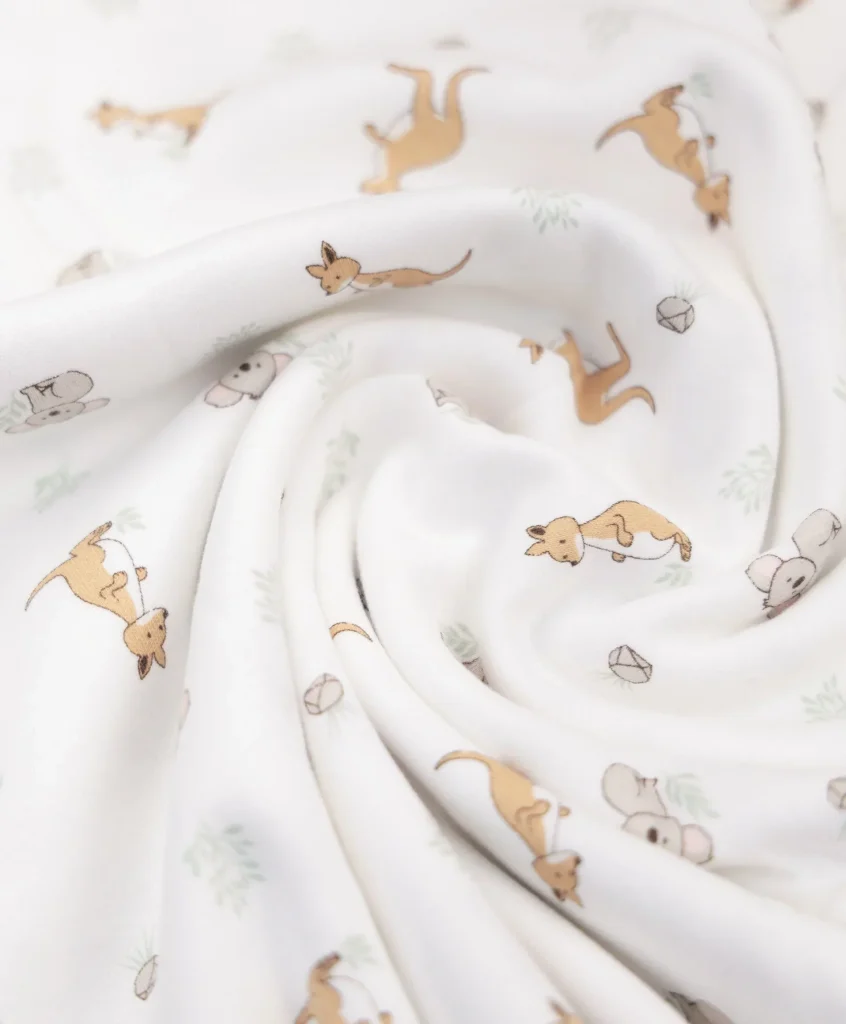
The Kangaroo & Koala wrap is the most distinctly Australian option. The native animal print gives it a clear local identity — something generic designs rarely achieve — and makes it a natural choice for gift-giving within Australian families. It pairs well with matching rompers, growsuits, and beanies from the same collection, making it easy to build a coordinated newborn set.
For grandparents or friends looking to give something that feels locally made and thoughtfully chosen, the Australian animal theme tends to resonate more strongly than generic prints.
Best for: families who want an Australian aesthetic, gift buyers looking for local character, parents building a coordinated collection.
2. Organic Cotton Baby Swaddle Wrap — Avocados
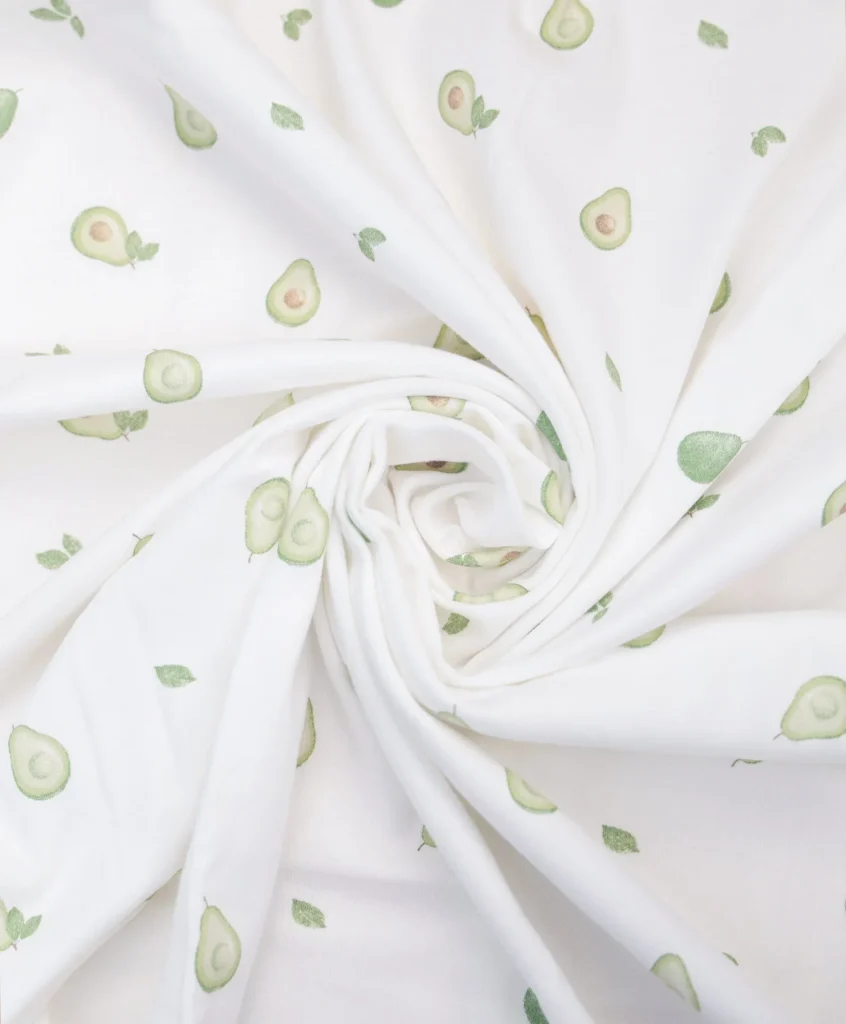
The Avocados wrap takes a lighter, nature-inspired look. The fruit print is playful without being overwhelming, fits comfortably in warm-toned and neutral nurseries, and works well as a gender-neutral option — practically useful when buying a gift without knowing the nursery style.
That flexibility matters more than it might seem. When purchasing for a baby shower or as a newborn gift, you will not always know the parents’ design preferences. A print that fits across most setups removes that uncertainty entirely.
Best for: gender-neutral setups, earth-toned nurseries, and gift buyers who want a safe, versatile option.
3. Organic Cotton Baby Swaddle Wrap — Bananas
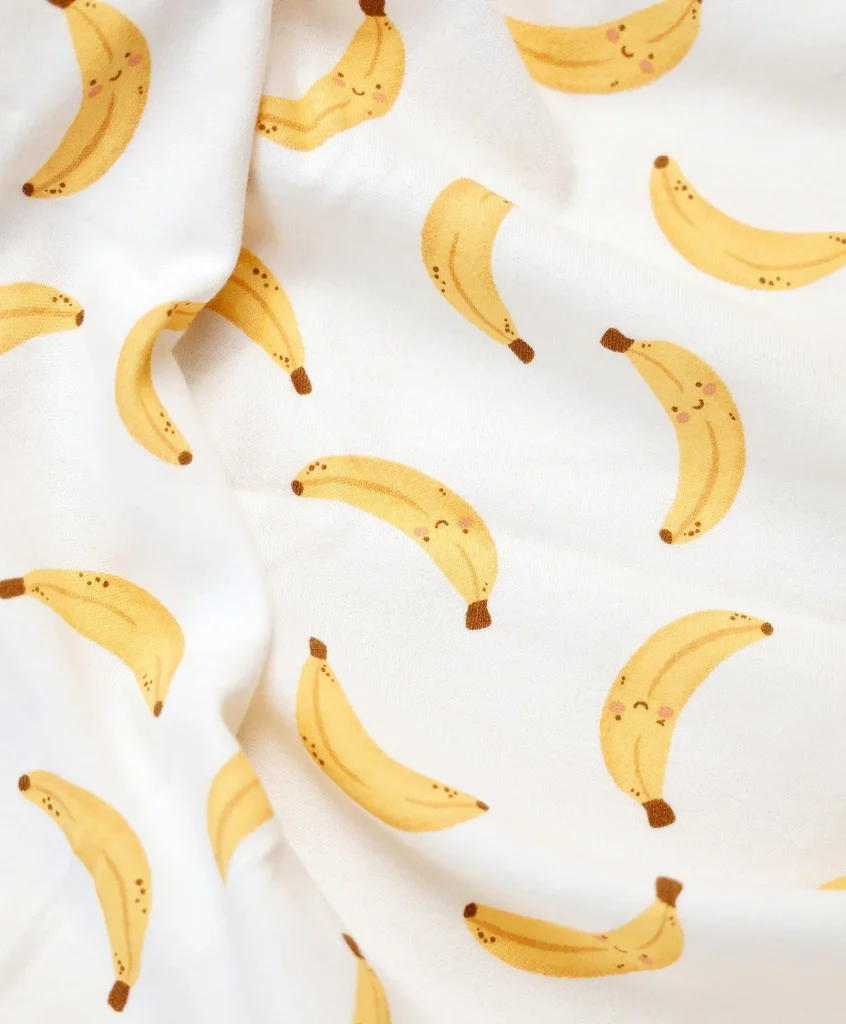
The Bananas wrap is the most playful option of the three. The bold fruit print brings a cheerful, upbeat energy that sits naturally in gender-neutral nurseries and pairs well with warm yellows, greens, and earthy neutral tones. Its vivid, distinctive pattern stands out in newborn flat lays and early milestone photos — something families who document the first weeks tend to value.
As a gift, the Bananas print is reliably well-received because it leans playful without being overtly themed — it works for any baby, in any nursery, regardless of what the parents have already chosen. It also coordinates easily with the Avocados wrap for parents who want a loose fruit-themed set without matching too precisely.
Best for: gender-neutral nurseries, families who prefer bold and cheerful prints, and gift buyers looking for something fun and universally appealing.
How to Use a Swaddle Wrap Safely
A swaddle should feel snug but never restrictive. Two safety points are especially important:
- Hip positioning: Leave enough room for your baby’s hips and knees to move naturally. Wrapping too tightly around the legs can affect healthy hip development over time.
- Rolling: Once your baby shows signs of rolling — typically between 8 and 16 weeks — stop swaddling. A swaddled baby who rolls cannot protect themselves.
In practice, one of the most common early mistakes is wrapping too loosely. A wrap that comes undone during sleep is less effective and can become a safety concern. Aim for a secure, well-positioned wrap that still allows natural movement at the hips.
Which Wrap Should You Buy First?
Match your choice to your situation:
- Want something Australian and character-driven: Kangaroo & Koala
- Buying as a gift, nursery style unknown: Avocados
- Gifting for a playful, cheerful aesthetic: Bananas
A practical starting point is two to three wraps. Two will cover back-to-back changes with a wash cycle between them, while three gives you a more comfortable buffer if laundry runs less frequently.
FAQs
What size should an organic cotton baby swaddle wrap be?
At least 100cm x 100cm gives you enough fabric for consistent technique. The Lūmmi wraps measure 110cm x 100cm — large enough for newborn use and practical as a lightweight pram cover afterward.
When should I stop swaddling?
Stop when your baby shows signs of rolling, usually between 8 and 16 weeks. Do not rely on age alone — rolling is the key indicator.
Can a swaddle wrap double as a pram cover?
Yes. At 110cm x 100cm, these wraps work well as a lightweight pram cover or a car seat blanket during the early months — one of the main advantages of choosing a larger size.
Which print works best as a gift?
Kangaroo & Koala suits families who appreciate an Australian theme. Avocados is the most versatile gender-neutral option. Daisies works well for a softer, floral preference. If unsure, Avocados is the safest choice.
How do I care for an organic cotton swaddle wrap?
Wash on a gentle cycle with a mild, baby-safe detergent. Line dry where possible, or tumble dry on a low heat setting. Avoid high temperatures — they can affect the softness and shape of the fabric over time. Rotating between two or three wraps also reduces wear on any single piece.
Final Takeaway
A good organic cotton swaddle wrap helps reduce startle wake-ups, supports settling, and stands up to the constant washing of the newborn stage. The most important specification to prioritise is 100% organic cotton in a size that gives you room to work — with 110cm x 100cm being a reliable benchmark.
All three Lūmmi in Colour wraps covered here share the same core construction. Once the practical requirements are met, your choice comes down to which design suits your nursery or the person you’re buying for.