Most people spend weeks researching a procedure and zero minutes thinking about what they’ll actually wear on day three of recovery. Then they come home, try to put on a regular pullover, and discover that raising both arms above shoulder height is very much not happening. That moment, trivial as it sounds, is where adaptive fashion starts to matter.
Getting dressed is one of the first things that signals to your brain that you’re a person again, not just a patient. The clothes you wear during recovery aren’t a footnote to the medical process. They’re part of it. And the good news is that the adaptive fashion industry has come a very long way from the beige, boxy, clinical-looking garments of a decade ago.
The Market That Quietly Became Massive
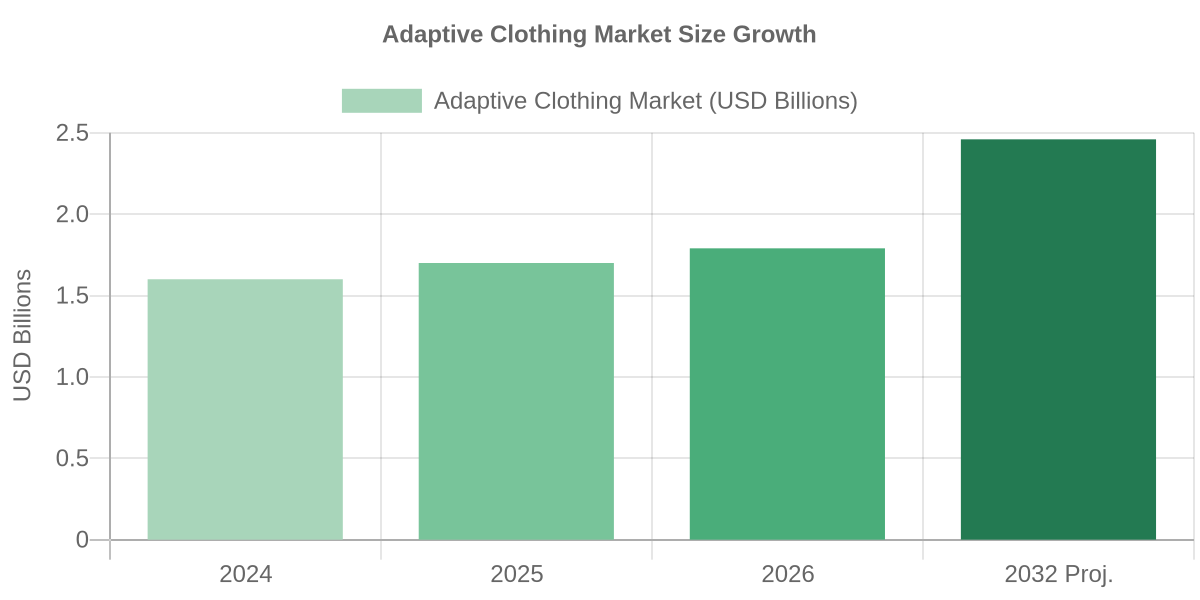
Adaptive clothing did not stay niche for long. The adaptive clothing market expanded from USD 1.70 billion in 2025 to USD 1.79 billion in 2026, with a projected CAGR of 5.37%. Depending on the research firm, projections vary, but the directional story is the same everywhere: demand is growing fast, and it is not slowing down.
The reasons are demographic as much as cultural. The World Health Organization estimates that 1.3 billion people, roughly 16% of the global population, live with significant disability, while the United Nations projects the population aged 65 and older to more than double to 1.6 billion by 2050. Add in the tens of millions who experience short-term mobility restrictions each year due to surgery, and the potential audience for well-designed recovery wear becomes enormous.
The women’s segment held a leading global market share of 48.65% in 2025, which tracks with who is asking the loudest questions about post-operative dressing. Women are more likely to seek out purpose-built recovery garments rather than just defaulting to oversized T-shirts, and brands have noticed.
What “Adaptive” Actually Means in Practice
The term gets used loosely, so it’s worth grounding it. Adaptive clothing is not just clothing that fits larger or smaller bodies. It’s clothing engineered around specific physical constraints, whether permanent or temporary, so that the act of getting dressed doesn’t require full range of motion, fine motor control, or a second person in the room.
The core design tools are: magnetic closures instead of buttons, side-zip and open-back panels, snap seams along sleeves and legs, and fabrics soft enough to sit against surgical tape without irritating the skin underneath. Magnetic closures and snap buttons eliminate the need for conventional buttons or zippers, making it easier for those with limited hand dexterity to dress independently, while open-back and side-zip designs provide easy access to surgical sites without requiring the wearer to lift arms or twist, and tearaway pants with Velcro fastenings allow caregivers to assist with minimal movement.
That last point, the caregiver angle, matters more than people expect. About 72% of caregivers and healthcare professionals report that adaptive clothing improves convenience and overall quality of life for individuals with disabilities. If you have someone helping you at home in the days after a procedure, garments with obvious snap seams and front access panels make that process less awkward and faster for both of you.
“Consumers today expect more than aesthetics. They expect comfort, flexibility, dignity, and choice.” Summarized from adaptive fashion trend reporting at Glance AI Fashion, December 2025. That shift in consumer expectation is exactly what has pushed major retailers off the sidelines. Primark’s adaptive clothing range was designed in collaboration with disability organizations and consumer focus groups, incorporating features such as easy-to-use fastenings, adjustable hems, and sensory-friendly fabrics to cater to a wide range of needs. When a value retailer commits to inclusive design at that level of rigor, it signals that adaptive fashion has crossed into the mainstream.
The F.A.C.E. Framework for Building a Recovery Wardrobe
After studying what actually frustrates people during recovery, a practical pattern emerges. Call it the F.A.C.E. framework: Fastenings, Access, Coverage, and Edge.
- Fastenings determine whether you can dress yourself. Magnetic closures and snaps beat buttons and zippers whenever one arm is compromised, or grip strength is reduced. This is the single highest-impact design decision in any recovery garment.
- Access refers to whether caregivers and clinicians can reach surgical sites, drainage tubes, or IV lines without requiring you to fully undress. Open-back or wrap-style tops make dressing possible without full repositioning, while front-opening nightwear allows easy access for wound checks without complete undressing. If you’re managing specific post-op equipment, and resources like guidance on Mastectomy Drains show in detail how much garment design matters in those cases, the access dimension of your wardrobe becomes critical from day one.
- Coverage is about managing swelling and protecting sensitive areas without compression. A loose, not baggy, fit provides enough room to accommodate swelling and dressings without excess fabric getting in the way, and soft breathable fabrics like cotton blends won’t irritate healing skin.
- Edge covers the details that people overlook until they’re screaming about them at 2 a.m.: interior seams that rub incisions, waistbands that press drainage sites, rough label stitching against raw skin. Sensory-friendly fabrics and flat seams reduce irritation on sensitive skin. Edge details are what separate a garment that works from one that gets thrown across the room.
Style Did Not Have to Die at the Hospital Door
Recovery involves both physical and emotional healing, and feeling confident in your appearance can contribute to a more positive mindset and help individuals stay engaged in social activities, rehabilitation programs, and everyday life. That’s not a soft observation. It reflects what occupational therapists and patient advocates have been saying for years.
The introduction of stylish, functional recovery wear has changed the narrative, making healing a more comfortable and dignified experience, with many brands now designing recovery wear that looks just like everyday clothing, helping individuals feel more like themselves during recovery.
The industry’s design evolution is accelerating. Ellie Brown, a recent graduate of Manchester Fashion Institute, showcased her adaptive clothing range, including a new design for inclusive jeans, to a global audience at the 2026 London Fashion Week, having been developing her brand Recondition since graduating in 2023. When adaptive design earns runway space, the culture has genuinely shifted.
My honest read: the brands doing this well are the ones that stopped treating recovery wear as a compromise and started treating it as a design challenge. There’s a meaningful difference between a top that merely allows you to get dressed and one that you’d actually choose to wear when a neighbor stops by.
Adaptive Fashion by Procedure Type
| Procedure Category | Primary Dressing Constraint | Most Useful Adaptive Features | Fabric Priority
|
|---|---|---|---|
| Breast/chest surgery | Limited arm raise, drain management | Front-open tops, internal drain pockets, magnetic closures | Ultra-soft cotton, no tight bands |
| Hip/knee replacement | No bending, limited twist | Side-snap pants, elastic waist, wide leg openings | Stretch blends, non-constricting waist |
| Abdominal / C-section | No pressure on incision site | High-rise alternatives, drawstring waist, wrap styles | Jersey, modal, bamboo |
| Shoulder surgery | One-arm dressing only | Full-length sleeve zips, wrap cardigans, snap shoulders | Lightweight knit, easy drape |
| Spinal / back surgery | No forward bend, no twisting | Open-back nightwear, front-close everything, slip-on shoes | Non-restrictive wovens, bamboo jersey |
Sources: Design feature data synthesized from Adaptive Clothing Showroom clinical guidance (2026) and June Adaptive post-surgery recommendations (2025).
Market size data sourced from Research and Markets, Adaptive Clothing Market Report 2026.
The Honest Checklist: What to Buy Before You Come Home
Waiting until you’re already post-op to figure out your wardrobe is a bad plan. Most people feel terrible, have limited reach, and do not want to scroll through 47 product listings while on pain medication. Sort this out beforehand.
- Two to three front-opening tops (wrap style or magnetic) in your usual size, not sized up. Sizing up introduces excess fabric that catches on dressings.
- Bottoms with elastic waists and no center-front seam pressure. Drawstring options are fine if you can tie them with one hand or have someone help.
- One open-front robe or zip-up hoodie for the first day home. You will want layers and you will not want to pull anything over your head.
- Slip-on shoes or shoes with Velcro closures. Tying laces is low on the priority list after most upper-body procedures.
- At least one garment with internal pockets or loops designed for drain bulbs if your procedure involves drainage. Purpose-built designs exist; generic pockets rarely work as well.
One thing I’d add from looking at community feedback across recovery forums: order one size fewer garments than you think you need, wear them, then buy more based on what actually worked. Recovery timelines vary a lot, and what you need in week one is often different from what you need in week four.
Where the Industry Still Falls Short
Adaptive fashion deserves credit for how far it’s come, but it also deserves honesty about its gaps. Sizing consistency is still poor across brands. A “loose fit” at one label is a circus tent at another. People with disabilities often find that clothing that is fashionable, on-trend, accessible, and affordable can be an unattainable combination. The price point issue is real, and recovery wear is not cheap when it’s done well.
Representation in product photography lags behind the design improvements. Most adaptive brands still show their products on bodies that don’t reflect the range of people who actually wear them during recovery. That’s a missed opportunity and a signal that the industry’s shift is still incomplete.
Accelerating growth in this market is driven by advances in inclusive apparel design, deeper healthcare sector integration, and evolving expectations among consumers who now seek garments that blend practical function with elevated style. Those consumer expectations are the forcing function. Brands that don’t meet them will simply lose ground to the ones that do.
Fabric Is Not a Footnote
People fixate on closure type and forget about material. That’s a mistake. After surgery, the body is more sensitive, making fabric choice crucial for comfort. Anything with synthetic fibers close to a fresh incision is a bad idea. Modal and bamboo blends are your best bets for the first two weeks. They’re breathable, drape softly, don’t generate heat the way polyester does, and wash without stiffening. Organic cotton is fine if it’s been pre-washed enough times to lose the initial rigidity.
Avoid anything with internal elastic that sits directly over a surgical site. Even light compression feels like pressure when your skin is inflamed. Side-panel elastic that sits clear of the incision line is fine. Waistbands that cross directly over the area are not.
Recovery Wear Is Not Forever, But It Matters Now
You will not wear these clothes for the rest of your life. That’s actually freeing. Your only goal is to get through the first weeks of recovery with as much dignity, comfort, and practical ease as possible. Every morning you can get dressed without help or frustration is a small win that compounds into a better overall experience.
When fashion adapts, it restores confidence, energy, and time. That sentence sounds like marketing copy, but it’s describing something real. The energy you don’t spend wrestling with a pullover that won’t clear your shoulder is energy available for actually getting better. The adaptive fashion industry built something genuinely useful here. Worth using it. What’s the one garment in your closet right now that you’d have to completely rethink if your range of motion dropped by half?