Think back to the last time you took a first aid course. Was it for a job you’ve since retired from? A summer camp decades ago? If you can’t quite remember, you’re in good company, and now might be the perfect moment to renew First Aid certification so the skills are fresh when a grandchild needs them. For grandparents who babysit, host sleepovers, or spend long afternoons at the park, that little card in your wallet matters more than you might think.
Here’s something most people don’t realize. A first aid certificate isn’t good forever. It has an expiry date, and the reasons behind that date are worth understanding.
How Long Does a First Aid Certificate Actually Last?
Most standard first aid and CPR certifications are valid for three years. After that, they expire, and you’re no longer considered certified.
Why three years? It isn’t a random number. Research shows that hands-on skills fade surprisingly fast when we don’t use them. You might remember the general idea of CPR, but the specifics, the depth of a compression, the rhythm, the ratio of breaths, start to slip within months.
Three years is the window where a refresher keeps you genuinely ready instead of just confident. And confidence without accuracy can be a dangerous thing in an emergency.
Why Do First Aid Skills Fade So Quickly?
Imagine you learned to drive a stick shift at twenty, then drove automatic cars for the next thirty years. Could you still work a clutch smoothly today? Probably not on the first try.
First aid is the same. The brain holds onto knowledge differently than skill. You might recall that choking requires back blows and abdominal thrusts, but freezing in the moment is common when your hands haven’t practised the motion in years.
That’s the quiet danger of a lapsed certificate. You feel prepared, so you don’t refresh, but your body has forgotten the steps your mind still half-remembers.
Why Does This Matter More for Grandparents?
Grandparents are often the unsung safety net of a family. You’re the one watching the little ones while parents work, run errands, or finally catch a movie. That trust is a gift, and it comes with real responsibility.
Young children face specific risks that adults rarely do. Small toys, grapes, hot dogs, and coins become choking hazards in seconds. A toddler can slip underwater in a bathtub faster than you’d believe. These aren’t reasons to worry constantly. They’re reasons to be ready.
Knowing child and infant CPR is different from knowing adult CPR. The technique changes with a child’s size. For an infant, you use two fingers instead of two hands, and the force is far gentler. A course that covers all ages, from adults down to infants, gives you the full picture.
What Does Modern First Aid Training Even Look Like?
If your last course involved sitting in a stuffy room for two full days, you’ll be relieved to hear things have changed.
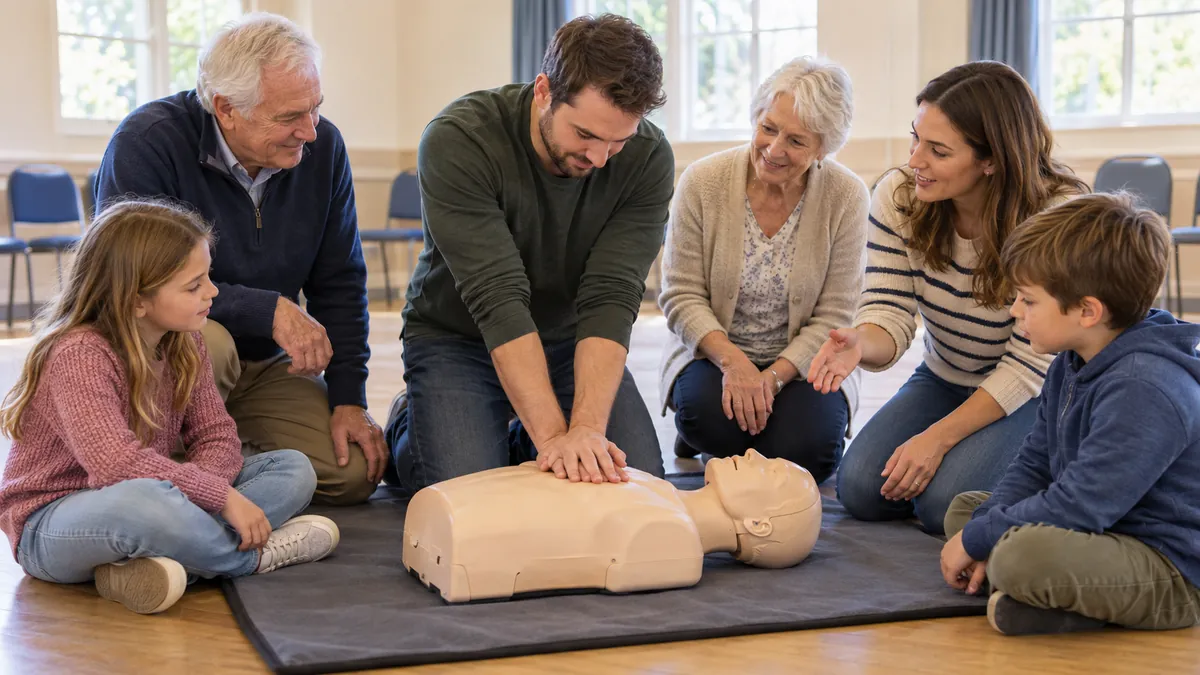
Many providers now offer blended learning. You complete the theory portion online, at your own pace, from your kitchen table. Then you attend one short in-person session to practise the physical skills with an instructor. No marathon classroom days required.
This format suits grandparents beautifully. You can read, pause, and re-read the online material whenever it fits your schedule. Then a single hands-on visit locks in the muscle memory that really counts.
What Core Skills Will You Walk Away With?
A good refresher doesn’t just renew a card. It rebuilds your readiness. Here’s what you can expect to practise and remember:
- Hands-only CPR for when someone collapses and isn’t breathing normally
- Child and infant CPR, with the gentler technique small bodies need
- Choking response for adults, children, and infants
- How to use an AED, the device found in malls, community centres, and rec facilities
- Managing bleeding, burns, and falls, the everyday scrapes of family life
These skills stack together. The same calm you build practising one helps you handle the others.
Does Quick Action Really Make a Difference?
It makes all the difference. In Canada, roughly 60,000 cardiac arrests happen outside hospitals each year, and only about 1 in 10 people survive.
That number sounds bleak until you learn what changes it. Immediate CPR paired with an AED can double a person’s chance of survival. For every minute that passes without CPR or defibrillation, survival drops by seven to ten percent.
Those minutes before paramedics arrive belong to whoever is standing there. If that someone is you, and your training is current, you become the reason a story ends well instead of in heartbreak.
Isn’t This a Lot to Take On at My Age?
Not at all, and here’s the honest truth: grandparents often make some of the calmest, most attentive students in any first aid class.
You’re not distracted by a hundred other things. You know exactly why you’re there. And you bring a lifetime of steady judgment that no textbook can teach. The physical parts are gentler than people expect, especially the infant techniques, which rely on precision rather than strength.
You don’t need to be an athlete. You need to be present, willing, and up to date.
How Do You Fit Renewal Into a Busy Life?
The beauty of blended learning is flexibility. The online theory fits around grandkid pickups, medical appointments, and your morning crossword. The in-person session is short and focused.
If you’re not sure whether your old certificate still counts, a quick check is worth it. When in doubt, renewing is never the wrong call. A fresh course rarely takes much time, and the peace of mind lasts for years. Exploring Coast2Coast First Aid courses is an easy first step toward getting current again.
Think of it as an investment, not in a credential, but in the children who climb into your lap and trust you completely.
What’s the Real Reason to Renew?
Strip away the expiry dates and the regulations, and you’re left with something simple. You renew so that if the worst moment arrives, you won’t be helpless. You’ll know what to do with your hands, not just your head.
That’s the quiet gift of staying certified. It turns panic into purpose. It lets love act, instead of freeze.
Your grandchildren don’t need you to be perfect. They need you to be ready. And readiness, like a certificate, is something you can renew.
What Everyday Situations Does Training Prepare You For?
Cardiac emergencies get the headlines, but most of what grandparents face is smaller and more frequent. A scraped knee at the playground. A bee sting. A tumble off the couch. Knowing how to respond calmly to these keeps a minor moment from spiralling into a scary one for a frightened child.
A good course covers the full range of common situations, including:
- Cuts and scrapes, cleaned and covered the right way
- Bumps, bruises, and falls, with guidance on when to seek more help
- Nosebleeds and minor burns, handled without the old myths that make things worse
- Allergic reactions, recognized early so you can act fast
- Febrile moments and general distress, met with a steady, reassuring presence
Children take their cues from the adults around them. When you stay calm because you know what you’re doing, they calm down too. That steadiness is a skill all its own, and it grows directly out of being prepared.
How Does Readiness Change the Way You Feel?
There’s an emotional payoff to renewing that rarely gets mentioned. Grandparents often carry a quiet worry about being capable enough, about keeping up, about being the reliable one the family counts on.
Current training answers that worry directly. You stop wondering whether you’d know what to do and start knowing you would. That shift doesn’t just make you safer. It makes you feel more confident in the role you cherish.
Picture a weekend with the grandkids where a small emergency crops up, and you handle it without a second thought. The parents come home to a calm house and a story about how well everything went. That’s the kind of trust a current certificate quietly earns.
It also sets an example. When children see the adults they love taking safety seriously, they absorb the lesson. You’re not just protecting them today. You’re teaching them, by example, that being ready to help others is simply what good people do.
If you’re looking for first aid and CPR training near Bloor Street West and Ossington Avenue, the Palmerston neighbourhood, or surrounding areas, you may reach out to Coast2Coast First Aid & Aquatics in that area.
Frequently Asked Questions
Q: How often do I need to renew my first aid or CPR certificate?
A: Most standard first aid and CPR certifications are valid for three years. After that, they expire and you’ll need to take a refresher or full course to be considered certified again. Renewing on schedule keeps your skills sharp and your card current.
Q: Is child and infant CPR different from adult CPR?
A: Yes. The technique changes with body size. For infants you use two fingers and a much gentler force, while children fall between infant and adult methods. A course that covers all ages gives grandparents the complete skill set for the little ones they care for.
Q: What is blended learning, and will it work for me?
A: Blended learning means you complete the theory portion online at your own pace, then attend one short in-person session to practise the hands-on skills. It’s flexible and especially friendly for grandparents who prefer to learn without long classroom days.
Q: Do I really need training if I only babysit occasionally?
A: Emergencies don’t wait for a convenient schedule. Even occasional caregivers benefit, because choking and other incidents can happen in seconds. Being trained means you can act calmly in the moment rather than wishing you’d learned sooner.
Q: I took a course years ago. Can I just rely on what I remember?
A: It’s risky. Hands-on skills fade within months without practice, even when the general knowledge sticks. A refresher rebuilds the muscle memory you need so your hands know what to do, not just your mind.