Summer vacation is such a welcome break from school and homework. But prolonged absences during the summer often lead to a decline in children’s academic performance. This is a typical math summer slide. But it’s not something to be afraid of if you know what to do.
What Is the Math Summer Slide, and Why Is It Different From Reading Loss?
Summer slide in math occurs because math is a sequential subject, where ignorance of one topic leads to ignorance of another. Although children see numbers on signs and in stores in real life, they rarely encounter formulas or multi-step problem-solving. This leads to children losing math skills faster than they do reading skills.
How much math practice kids typically lose over the summer
Insufficient summer practice significantly affects a child’s future academic performance. On average, children can lose 2 to 3 months of knowledge over the summer. This decline means that teachers have to make up for the gaps in math over the summer, in addition to teaching new material according to the new curriculum.
Why grandparents are well-positioned to fill the gap
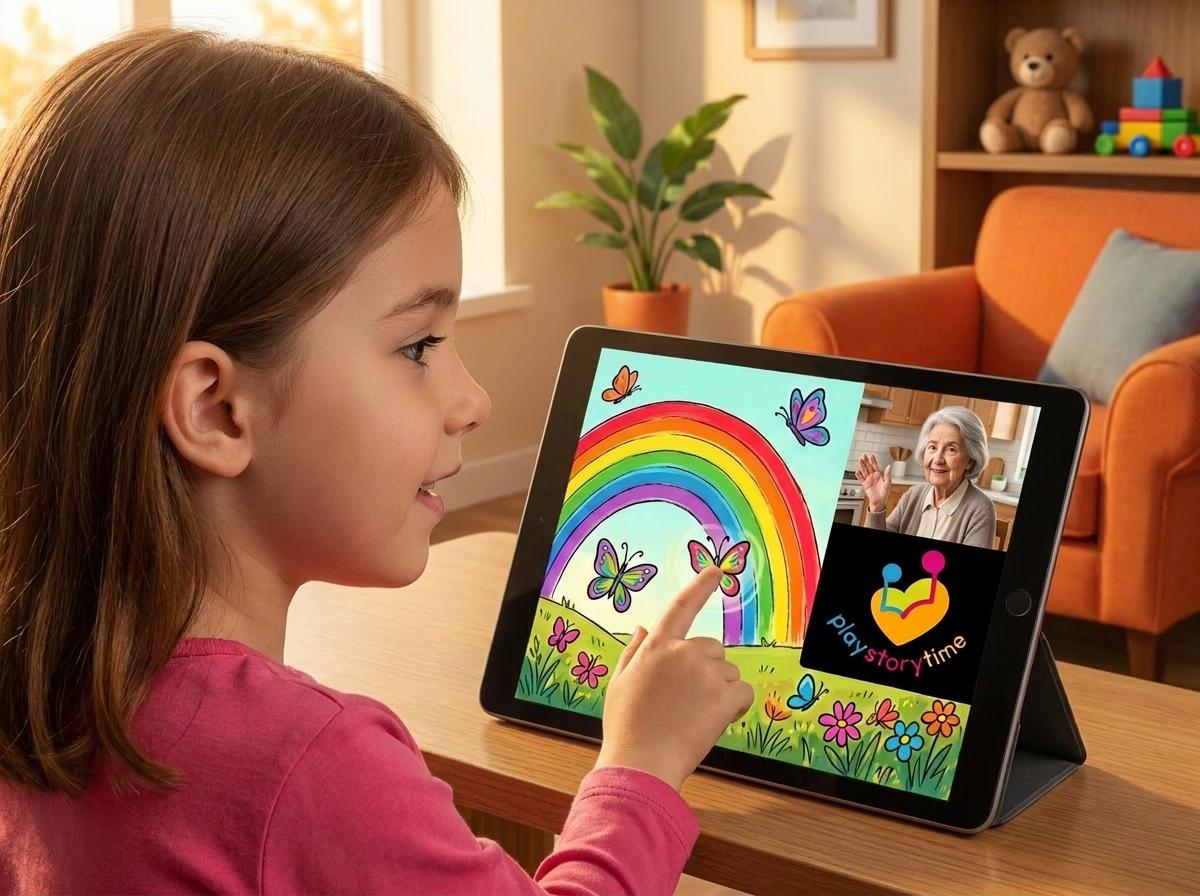
Since grandchildren often spend their summer vacations visiting relatives, grandparents can help keep their knowledge up. This doesn’t mean you have to dust off old textbooks or become a strict teacher. Instead, you can use structured online math tutoring for kids as a shared resource, allowing a professional to do the studying while the grandparents support and encourage them. This approach allows a professional tutor to map out the lessons and fix specific gaps, leaving you free to do what grandparents do best: offer patient support and steady encouragement.
Subtle Signs a Grandchild’s Math Confidence Is Slipping
Knowledge slippage in the summer occurs without visible signs. There are no tests and assessments in the summer, so it becomes more difficult to notice that a child has forgotten math than, for example, reading. These gaps are difficult to notice until the start of the school year and the beginning of real classes with tests. Since grandparents spend a lot of time with their children during the holidays, they may be the first to notice math problems.
Hesitation with mental math or number facts
When a child stops doing math every day, the brain gets rid of the paths that help with math. This happens because the brain is not being used for math, and it causes a delay when the child is talking to someone. For example, a grandchild who could easily calculate the cost of two ice creams in May might have to think for a few seconds to do the same math in July. This shows that the child’s basic math skills are fading from disuse, and the brain is losing its ability to make calculations as quickly as before.
Avoidance of math-related games or chores
If math problems make them feel stressed inside, they will change what they are doing to get rid of that bad feeling. For example, a grandchild might stop playing a board game they love because it involves math, like rolling dice and counting spaces. This is because math is hard for them. It makes them feel uncomfortable. They might also do things like give a grown-up the receipt at the store or walk away when they are baking because these things have math. And kids don’t want to deal with frustration. Kids do these things because they have trouble with math, and they don’t know how to do it so they just try to avoid it.
Low-Stress Ways to Keep Numbers Part of Everyday Life
Preventing summer slide in math doesn’t require a traditional classroom setup for learning math. You can easily use numbers and practice math. For example, you can count things when you are out on a walk or at the store. This way, a grandchild can keep their mind active. Have fun while learning without getting anxious.
Math hiding in cooking, shopping, and road trips
Hidden arithmetic possibilities abound in everyday summer math activities. These typical tasks contain numbers:
- To practice fractions, cut a baking recipe in half.
- When you go shopping, figure out the price per ounce.
- Before you check out, estimate the cost of the groceries.
- Keep track of your overall mileage when driving lengthy distances.
- Determine the journey time by using the vehicle’s speed.
- When taking family road trips, keep an eye on how much fuel you use.
Card games, board games, and dice games that build number sense
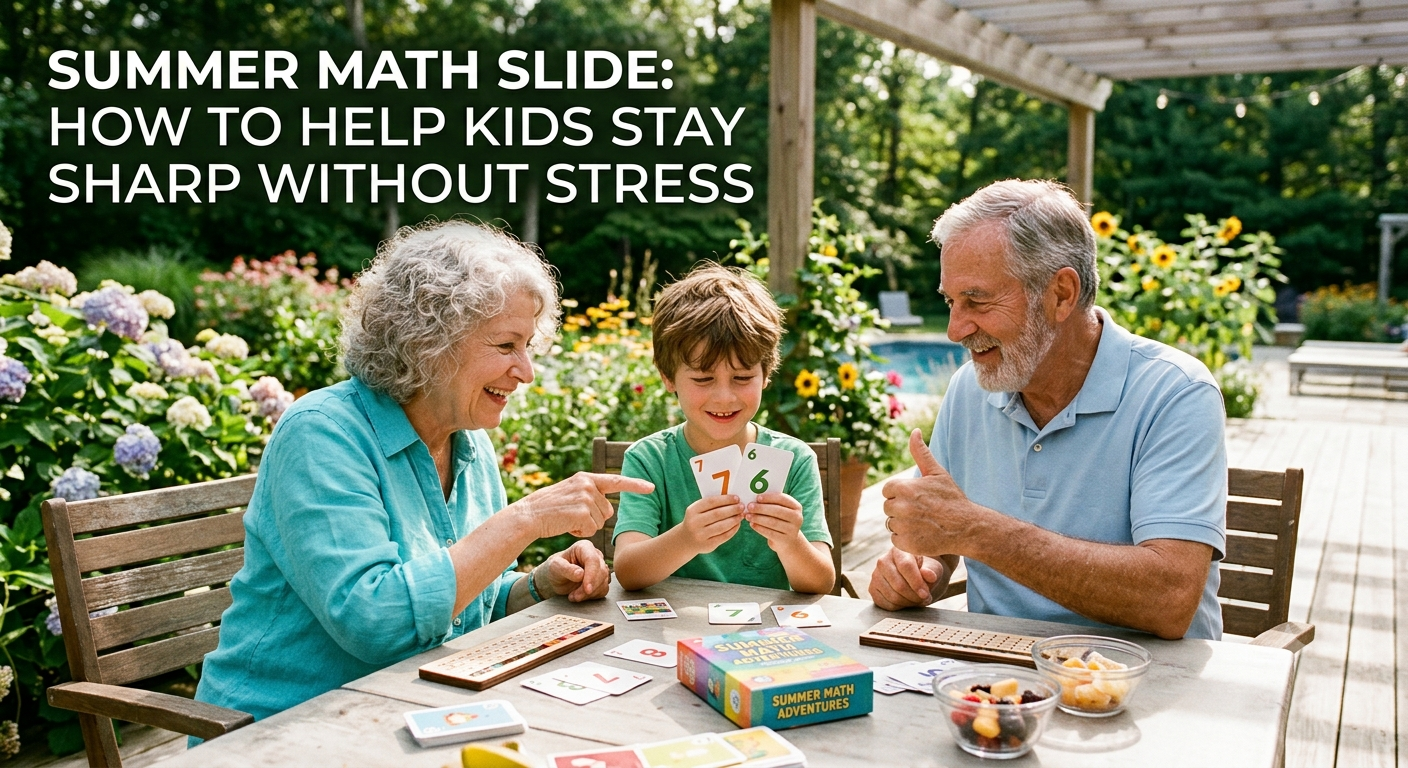
Playing tabletop games necessitates ongoing computations that develop numerical automaticity. These enjoyable exercises and summer math games maintain math proficiency:
- Roll several dice and quickly add totals.
- When playing Monopoly, count the property cash spaces.
- To win a round, multiply the cards that are drawn.
- To create particular number combinations, group cards.
- When playing board games with your family, manually score points.
- To find the winner, deduct the remaining points.
Short 10–15 minute “math moments” instead of long sessions
Extended study sessions throughout the summer lead to instant mental exhaustion. Critical memory circuits are successfully preserved by brief interactions:
- During breakfast, do one logic puzzle.
- While you’re strolling, do some quick mental math.
- Solve a quick daily calendar puzzle.
- Number games should not last longer than fifteen minutes.
- Put an end to the activity before you become bored.
- During casual discussion, go over the calculation rules.
When a Little Structure Helps More Than Worksheets
When a child has specific learning gaps, random practice in math in summer in the middle of the day is not enough. Structured help must be introduced.
What to look for in a summer math program or tutor
A well-thought-out math summer program or learning activity will always be perceived as fun, not a punishment. Look for programs that adapt to your grandchild’s specific needs, rather than giving him template worksheets.
- Steer clear of programs that emphasize memorization alone.
- Instead, select websites that offer interactive online math lessons.
- Look for an instructor who can explain the principles of mathematics.
- Seek out quick diagnostic tests that identify particular shortcomings.
- Choose applications that make use of vibrant, visual models.
- Make sure the tutor provides constructive criticism.
Why short, consistent sessions beat occasional cramming
It doesn’t work to cram all the week’s math into a single lengthy weekend session. The developing brain quickly becomes fatigued and stops processing information. Permanent abilities are developed considerably more quickly with brief, frequent updates.
- Try to get in 15 minutes four times a week.
- Steer clear of extensive, draining study sessions on the weekends.
- In between sessions, allow the brain to relax.
- Take two minutes to review the subject from yesterday.
- Maintain a consistent weekly program.
- While the child is still enjoying the lesson, end it.
Keeping It Fun: Avoiding Pressure and Power Struggles
Framing math as play, not a test
If math at home feels like school, children quickly shut down. Keep your approach casual to lower their defenses and encourage participation.
- Avoid using timers during math games.
- Drop the word test from your vocabulary.
- Let your grandchild guide the activity choices.
- Use real objects like snacks for counting.
- Stop immediately if the child shows frustration.
- Keep your tone light and conversational at all times.
Conclusion
Summer math slump can happen to many, but grandparents can help. You don’t have to be a teacher or use textbooks with complex problems. Simple daily activities, casual games, and a positive attitude support knowledge better than anything else in the summer. When your grandchild needs extra support, you can always use online math tutoring for kids, which takes the burden of teaching off your shoulders.